Wednesday, July 19, 2023

A week with Environmental Educators on Skyros

In researching sustainable public policy in Mediterranean communities it is impossible not to come across the work of Dr. Constantina Skanavis. Over three decades of advocacy and research on the interconnection between public health and the environment, Dr. Skanavis has built a reputation as an expert on sustainable solutions in practice. She is the dean of Public Health at the University of West Attica, and one of the co-founders of the The Skyros Project

The Skyros Project is a collaboration between a port on the island of Skyros, and the University of West Attica. The port itself has adopted sustainable public policy, earning it the distinction as a "blue port." and the Best Port in Greece! In addition, Dr. Skanavis runs a summer Environmental Education Academy as part of a Masters Program. The participants are mostly educators and health professionals from across Greece who are interested in including environmental education in their day jobs. This is where I come in. To my great fortune, Dr. Skanavis was interested in helping me with my Fulbright project, agreed to be my advisor, and invited me to be a part of this year's Academy on Skyros.

Despite the fact that this was outside the timeline of my Fulbright award, this was an incredible opportunity to learn about environmental education in Greece from expert presenters gathered by Dr. Skanavis, and also to network with people across the country. And, did I mention Greek island?

I spent the first week in July this summer on Skyros as part of the Academy. It was an incredible experience, and the contacts I made will help me jump start my research. I met some incredible professionals thinking about new energy like hydrogen, building environmental programing in elementary, and secondary schools, and helping to transition cities as part of EU initiatives. 

Among the most interesting conversations I had was with the elected head of the award winning port on Skyros, who said that while climate change may or may not be happening, sustainable policies make sense because it's what customers want. The status of his port as a Blue Port is good for business, and good for the island economy of Skyros, dependent on tourism. These are the kinds of market based solutions that I think are valuable.

Thank you to Dr. Skanavis, and all the dedicated educators and health professionals I had the opportunity to meet. I'm looking forward to meeting you all again next year!


Thank You, Fulbright, for the Distinguished Awards in Teaching Fellowship!

Great news! I was awarded a Fulbright Distinguished Awards in Teaching Fellowship, which will bring me and my family to Greece for six months during my sabbatical year, 23-24. I'll use this blog to document the experience, and this site will host the final product of my research. 

For this research project, I'm interested in how we communicate climate change challenges and solutions to secondary students. I have lived and taught here in coal country for over a decade. The impacts of our changing climate in my region are direct, and subtle. Our storms are getting bigger, with so-called 100 year storms happening several times a decade. 

As chair of our small town's Public Works Committee (an elected, volunteer position) I see this in rising costs of flood prevention, and overall stormwater management. This means increased taxes for improved infrastructure. It should also mean changes to buildings codes, and public policy dealing with stormwater runoff. Think rain gardens, permeable pavers and rain barrels. It also means education about how to protect our watershed.

A more subtle, yet damaging impact of climate change is the dramatic reduction of coal as a means to produce electricity. Southwest PA is coal country, and as the use of coal has crashed, so has the local economy. We're feeling these impacts in real time; last month (June 2023) one of the largest coal fired generating plants in the country, and one of three in our county, turned off for good. One hundred twenty nine jobs lost directly, hundreds more in the supporting businesses, like truckers and restaurants. Many students at my school have family who had a job at the end of the year, but won't in the fall. 

Transition economies require new thinking, new inspiration, and new skills. Our community is in transition and has an opportunity to build a new sustainable economy. Our students today inherit economic challenges their families were able to weather thanks to strong demand for fossil fuels, and strong unions.

My project is looking outside of Indiana, PA to other communities facing immediate challenges, not just to the physical landscape around them, but to their economic livelihoods. To that end, I researched coastal communities facing sea level rise and other challenges to economic drivers like tourism. In regions dependent on pristine beaches and coast lines, sustainable, "eco" solutions make a lot of sense.

To my great fortune, I came across a great Eco-model at a deep water port on one of the many Grecian islands, called Skyros. The Skyros Project is an award winning collaboration between public health researchers at the University of West. Attica and the deep water port on Skyros Island. 

I've managed to team up with the incredible folks behind this project, and they've already proved to be an incredible resource to connect with educators across Greece who are leading the way in preparing students to face the challenges to come. I'm looking forward to being able to use that project as a jumping off point for my research. More on that in the next post.


Monday, August 22, 2022

Equity and inclusion are good for math, and America

Equity and inclusion are good for math, and America

Taraji P. Henson's portrayal of Katherine Johnson
dumbfounds the white establishment.
A favorite go-to movie in my math class is the 2018 film, Hidden Figures. It is a great film for math class, because it tells the story of incredible people using the tools they had to think outside the box, to solve a real life challenge. The challenge the film recreates takes place at NASA in the 1940s, when our country's best engineers were racing the Russians to space during the cold war tensions. The mathematics of predicting the motion of a object as it moves from a parabolic path, a launch, to an elliptical path, orbit and back again didn't exist. It was invented/discovered by the now less hidden, Katherine Johnson

The movie highlights the excellence of her and other black women who were the literal calculators launching America into space, while living under the male dominated world of NASA, and the dramatic racial oppression of the late Jim-Crow era. 

Dr. Taimina's beautiful crocheted models of
hyperbolic planes launched new fields of study.
 
Another mathematical hero of mine I share with my students is Dr. Daina Taimina, a retired Professor of Mathematics at Cornell University. Her groundbreaking work used crochet to conceptualize hyperbolic geometry, illuminating a problem that had baffled two millennia of mathematicians, including myself. 

Her solution took the best drawing that the best mathematicians since Euclid could muster (line drawing at the left), and demonstrated that an ages old craft (and coral reef) have been comfortably demonstrating hyperbolic planes in the living rooms of craftswomen the entire time.

Win Win Win
Historically, people of color, and women have been both implicitly, and explicitly denied access to top education in mathematics and engineering. The simple point I make to my students is that these two women mathematicians are shining examples of what happens when barriers to mathematics are overcome. It is not just that their personal lives were improved, but in fact through their ingenuity, they actively moved forward our understanding of the world. 

Efforts for equity and inclusion are not just about improving individual outcomes. In fact, we are ALL better off when we are all included.


Wednesday, January 27, 2021

#awesomegraphs7 COVID19 Edition

#Awesomegraphs7

Teaching hybrid during the COVID19 pandemic is intense. In addition to the daily heavy weight of managing multiple tech software and hardware devices to try and offer as equitable and quality lessons as possible, as a math teacher I feel a responsibility to help students understand the how data is impacting our response to the virus.

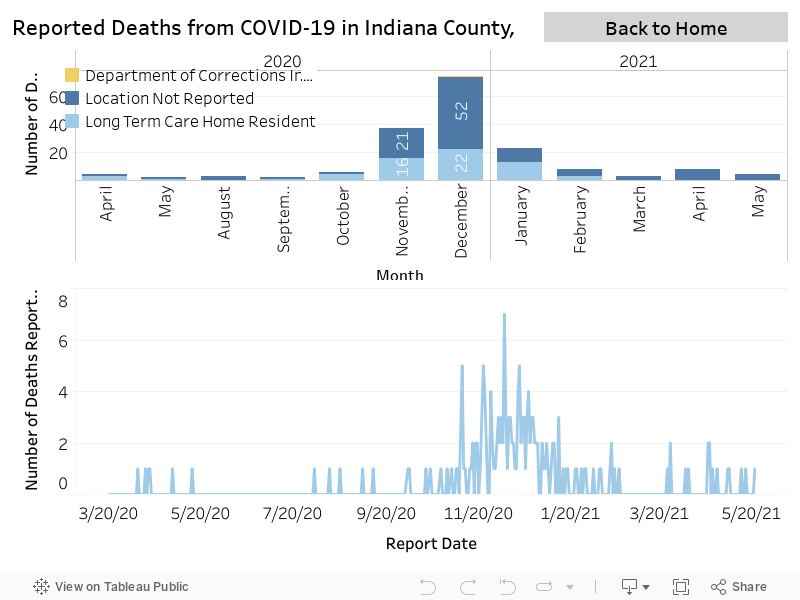
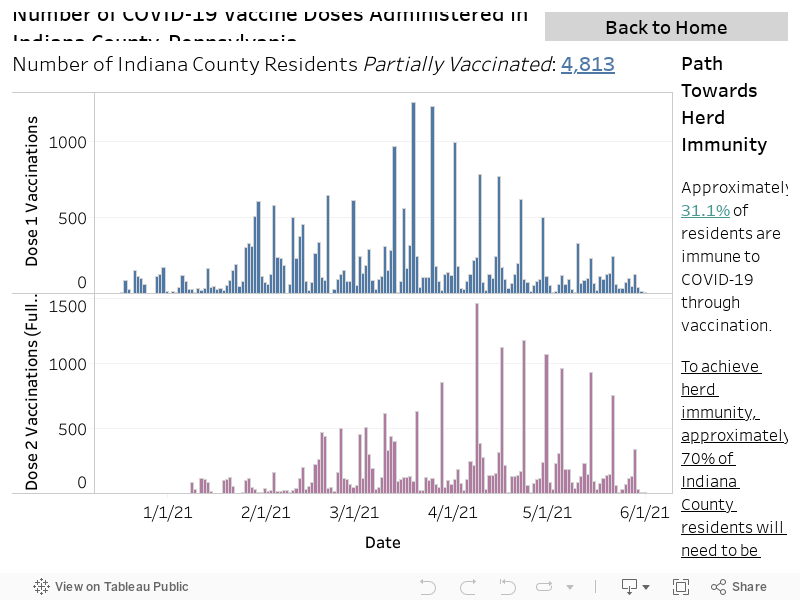
A go-to source for local COVID19 data is my #awesomegraphs7.

Alison Simmons, MPH is an alum of my school, and currently is a PhD student at the Dalla Lana school of Public Health at the University of Toronto studying infectious disease epidemiology. She's been maintaining an Indiana County public dashboard of COVID related statistics since March.

Last fall, she was a guest speaker for my Integrated III class, where she let my seniors know of some high school math that will help them understand the pandemic. This included exponential growth.


Her most recent update is much cheerier data.

What do you Notice? What do you Wonder?


Friday, January 31, 2020

#awesomegraphs6

I am incredibly proud of the Semester projects from my Integrated III class. This group of seniors appropriately applied mathematical models to art, catapults, tennis balls, Java, video editing, and an #awesomegraph.  These young adults are career and college focused, and learned technical skills to give themselves an edge.

The class includes students who haven't always seen a lot of success in math classes, so I was very excited about the outcomes. Projects included a need to consider different functions, from linear to exponential to trig, or a coding project. Some of the results are below. I was very impressed with the creativity shown by my students - yours truely even made an appearance!

Friday, September 13, 2019

#awesomegraphs5


#Awesomegraphs.5

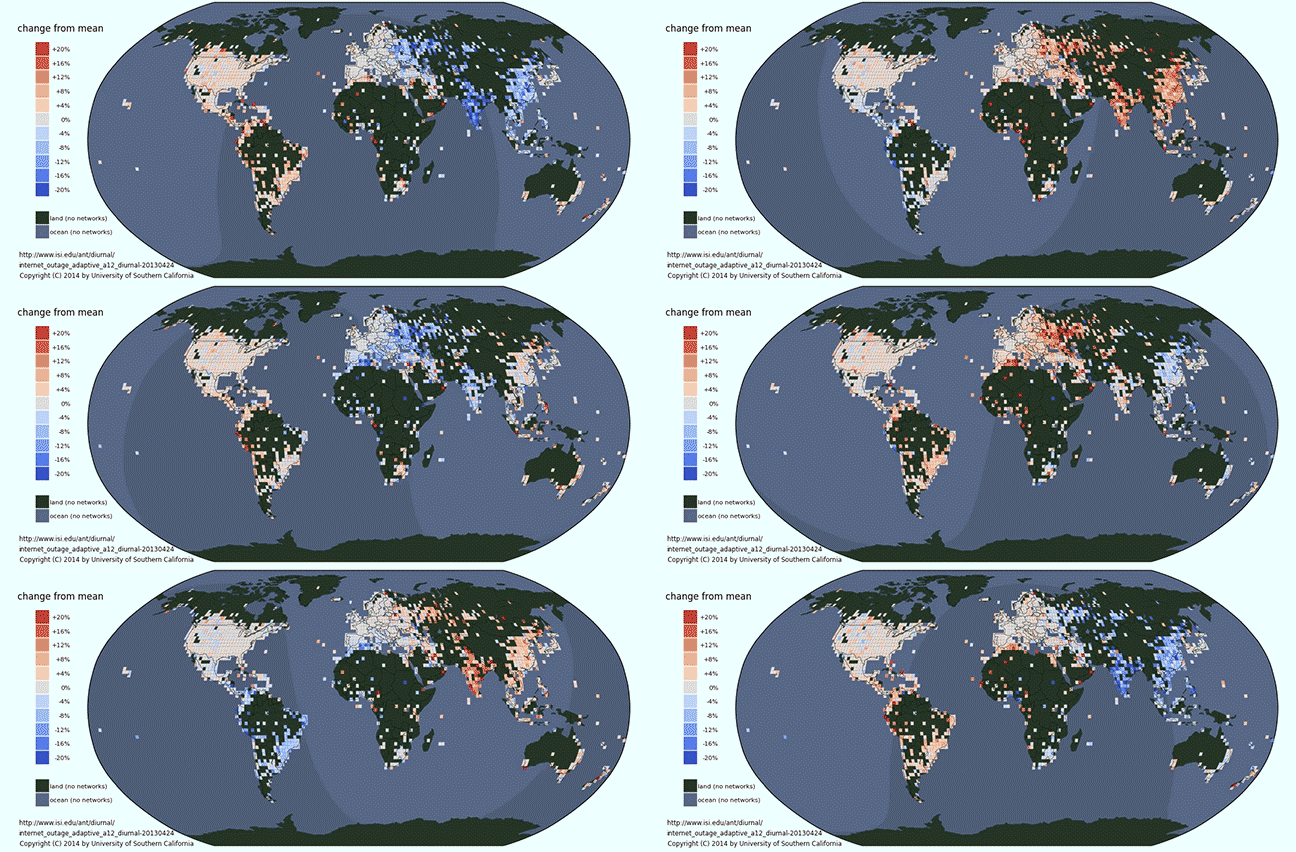
I have been  Notice and Wonder'ing with this #awesomegraph for many years from the bright folks at USC Viterbi who tracked internet usage across the world over several months. Students often notice that while many places in the world have big swings in internet usage, the U.S. remains steady.

It is a great way to generate conversation about cross-cultural perspectives in terms of access to the internet. Today, my host from my Fulbright exchange in Mahe, India, Rathnakaran and I did a Google Hangout with our two grade 7 classes, and used this graph as a start of a conversation.

For our first attempt it went great! Students asked eachother about how and when they get on the internet, about social media, and about foods.

Thanks to Jawahar Navodia Vidalayala Mahe for changing your schedule so that this could work. Let's do it again soon!


Tuesday, July 30, 2019

Kashmir is beautiful

I went to Kashmir because when I met Waseem Aziz two years ago through his Fulbright exchange, he told me that there are ski resorts in the Himalayas. The place did not disappoint.  Waseem took me on a whirlwind tour of some of the sights over four days of perfect weather. We started in at the mountain town of Sonamarg, where the Thajiwas Glacier nearly sinks into town from snow-capped peaks. We took a short trek into the mountains, passing scores of Indian tourists on horseback and a couple of school groups. The air was clear and thin, but we made it to a small waterfall and I got to do some boot-skiing down a snowfield. This area is protected from development, but there are nomadic tribal Kashmiris who make their homes there in the summer herding goats, and take people sledding down July snowfields on traditional toboggans. Sonamarg is also on the route of a Hindu pilgrimige to the Amarnath caves, and on the route to the high mountain area of Ladakh. We saw a a lot of traffic going this way, and did some shopping in the shops along the muddy main road.

Next up was Goulmarg, where we stayed in a traditional vacation hut, which was decked out with intricate Kashmiri wood carvings from floor to ceiling. We skipped the horseback rides, and opted instead for a ride on fat bikes, which I loved, and Waseem thought may have been over-rated. The scenery was not as dramatic as Sonamarg, but, this area stays open all year round. I would love to come back for skiing.

While getting a glimpse of these sites while in Kashmir was exciting, I am also always interseted in everyday experiences. Waseem and I ate a lot of meat, lamb kabobs and lamb balls, red and white sauce, at roadside resteraunts all along our trip. We also stopped at Waseem's hometown, where I got to meet two of his three brothers, his father, mother an uncle and some cousins. Kashmiri living rooms feature a carpet, and pillows around the walls where we leaned back and drank tea. The Aziz family is intense, and within three minutes of meeting his older brother, we were debating religion and morality over tea.

We ended the weekend trip cruising through Srinigar in Waseem's car with his younger brother as a driver. Dal lake is beautiful, and is peppered with more intricately carved houseboats and leisure boats lined up along the shore. I even saw a water skiier cursing in the distance. We also visited the Mogul gardens, where scores of Kashmiri families were relaxing the day away in and out of these this 12 level fountain.

Indeed Kashmir is beautiful, but, I would be remiss if I didn't also mention that Kashmir also feels occupied. The Indian army is everywhere, with heavily armed troops posted every 500 meters along the main roads, as well as armored cars, and long convoys with soldiers posted out of the top of cabs holding automatic weapons. This is because many Kashmiris do not want to be part of India, and in some recent instances individuals have taken up arms against the Indian army, and have been killed.

In talking to people about it, there is clearly a lot of resentment at this heavy military presence. People I spoke with would say things like "in India, things are different than here," not even acknowledging the fact that Kashmir is part of India. This was identified to me as the language of resistance. Many Kashmiri's want their own state, independent of India. I don't know how that is going to work out. I never felt unsafe at any point, crime rates are much lower than they are in other parts of India. But, the unfortunate status quo is a heavy, persistent military state, warnings from the U.S. State department for foreigners to travel there, and thus untapped potential for tourism and development.